PPS hands cell death case over to Manitoba

After a year of secrecy, the victim gets a name: Corey Rogers

The Nova Scotia Public Prosecution Service says a conflict of interest prevents it from providing legal advice to the Serious Incident Response Team regarding the death of Corey Rogers, 41.

This is the first official identification of Rogers since his death in a Halifax police cell on June 16, 2016. The delay constituted a level of secrecy that is unacceptable in a democracy.

Rogers, of Spryfield, had been arrested for pubic intoxication but not charged. He was well-regarded by people who posted on his Facebook page.

The PPS says it has asked its counterpart in Manitoba
Corey Rogers
Corey Rogers

to provide advice to SiRT Director Ronald J. MacDonald on whether a criminal prosecution is warranted. It’s my belief that MacDonald has wanted a prosecution since early this year, but hit a roadblock with the PPS.

From the news release: “As we examined the material being gathered by SIRT, it became apparent the prosecution service was in conflict,” said Martin Herschorn, director of public prosecutions. “To avoid any conflict of interest or appearance of conflict, the involvement of another prosecution service is necessary to ensure public confidence in the PPS and in the administration of justice.”

You can find the full PPS news release here and in the text box below.

You can find my most recent post on this story here. For all six previous posts on Corey Rogers, click on the “CR” category at the bottom of this page.

Public Prosecution Service Calling in Manitoba to Advise SIRT Investigation
Public Prosecution Service

July 5, 2017 2:21 PM


The Nova Scotia Public Prosecution Service (PPS) has asked the Manitoba Prosecution Service to provide legal advice to the Serious Incident Response Team (SIRT) on its ongoing investigation into a 2016 death in Halifax Regional Police cells. 

On June 16, 2016, Corey Rogers, 41, was found unresponsive in a police cell at 1:45 a.m. Emergency Heath Services were called but Mr. Rogers could not be revived. SIRT was then called in to investigate. 

The Public Prosecution Service provides legal advice to any police agency during an investigation, when requested.

“As we examined the material being gathered by SIRT, it became apparent the prosecution service was in conflict,” said Martin Herschorn, director of public prosecutions. “To avoid any conflict of interest or appearance of conflict, the involvement of another prosecution service is necessary to ensure public confidence in the PPS and in the administration of justice.” 

The Manitoba Crown has agreed to advise SIRT as it moves forward with its investigation and will prosecute any criminal charges that may result. 

It is common practice for prosecution services across Canada to help each other in conflict cases. Currently, for example, Nova Scotia Crown attorneys are dealing with matters in Newfoundland and New Brunswick.

FOR BROADCAST USE:

     The Nova Scotia Public Prosecution Service has asked the 

Manitoba Prosecution Service to provide legal advice to the Nova 

Scotia Serious Incident Response Team as it investigates a 2016 

death in Halifax Regional Police cells.

     On June 16th, 2016, 41-year-old Corey Rogers was found 

unresponsive in a police cell at 1:45 a.m. Emergency Health 

Services were called but, when resuscitation efforts were 

unsuccessful, SIRT was called in to investigate. 

     Martin Herschorn, director of public prosecutions, says 

that as the Crown examined the material being gathered by SIRT, 

it became apparent the Nova Scotia Public Prosecution Service 

was in conflict. He says the involvement of another prosecution 

service was necessary to avoid a conflict of interest or any 

appearance of conflict. 

     The Manitoba Crown will advise SIRT as the investigation 

progresses and will prosecute any criminal charges which may 

result.

     It is common practice for prosecution services across 

Canada to help each other in conflict cases.

-30- 

Media Contact: Chris Hansen
              902-424-2225
              Cell: 902-430-5529 
              Email: Chris.hansen@novascotia.ca

 

A life and death dishonoured

It’s time for the authorities to clear their heads and come clean on CR’s death. Apart from the threat to civil liberties, a year of official silence dishonours the life and death of a man who was loved and is missed.


When officials create an information vacuum, regular folk will fill it with theories.

Here then, is the Turpin Laboratories theory of why the identity of CR remains a provincial/municipal secret a year after he died in a Halifax police cell: the Serious Incident Response Team, which investigates possible misdeeds in the policing world, and the Public Prosecution Service, which prosecutes when SiRT brings charges against someone, don’t get along.

And they don’t get along, the theory goes, because of the “Officer 1” case. In January 2016, SiRT charged Officer 1 with stealing “cut”, a substance used for diluting illegal drugs, from the HRP evidence room. The PPS, aka “the Crown”, failed to act until it was too late to go ahead with the prosecution, so Officer 1 got to walk away from it all.

SiRT gets the last word in these situations, so its director, Ron J. MacDonald, wrote a masterpiece in the art of flaying another organization while being studiously neutral.

Here is MacDonald’s conclusion:

This investigation led to the conclusion that there were sufficient grounds to lay charges of theft, breach of trust, and obstruction of justice. As a result, charges were laid on January 27, 2016, and SiRT’s file was provided to the Crown on March 15, 2016. Subsequently, the Crown entered a stay of proceedings on May 30, 2016. On January 27, 2017, SiRT was informed by the Public Prosecution Service that due to issues related to delays in the prosecution of the charges, that the charges would not be re-instituted.

As a result, Officer 1 is deemed never to have been charged with any criminal offence.

You can find more on this here and MacDonald’s concise report here.

At best, we have here a conflict between two public agencies with different mandates over two unrelated policing issues. Worse, is the possibility the two organizations are engaged in a peeing match. Worst, is the possibility that SiRT believes the PPS is protecting bad cops.

How have we arrived at these hypotheses? We know that MacDonald wants to charge someone because both SiRT and the PPS acknowledge they’re currently discussing CR’s case. Chris Hansen, a PPS spokesperson, said last week: “I think it would be correct to say advice from the Crown is ongoing as the investigation continues.”

We know that SiRT and PPS have been batting this one back and forth since January or February because MacDonald told me in late 2016 that CR’s case would be ready early in 2017.

In other words, as in the Officer 1 case, SiRT wants to prosecute and the Crown is taking a long time to get  on board.

SiRT and police don’t need PPS permission to file charges, but they almost always consult first. It makes sense because if the PPS does not believe the case will succeed, then there’s not much point in going ahead with it. If you ignore the Crown’s advice and lose, well then you have career-damaging egg on your face.

Hansen said there is no connection between the two cases. When I asked MacDonald about that, he was studiously forthright: “I do not intend to address that question.”

It’s time for the authorities to clear their heads and come clean on this. Apart from the threat to civil liberties, a year of official silence dishonours the life and death of a man who was loved and is missed.

Other posts about CR:

One death, 365 days of inquiry, 0 answers

Did a police dog eat SiRT’s homework?

Irony or hypocrisy?

Criminal charges disappear along with dope

Sure hope there’s no cover-up here


One death, 365 days of inquiry, 0 answers

A year ago today, June 16, 2016, a 41-year-old man died in the holding cells of Halifax Regional Police after being arrested, but not charged, for public intoxication.

Strictly speaking, we do not know who he was. Neither HRP nor the Serious Incident Response Team, which is investigating, will say, and they are the only official sources.

This is worthy of a little soak time. A man was taken off the street by the Halifax police and died in their custody, but his name is a secret. Oh, and there are indications the death involved a criminal act. You’d think that by now the media and/or the Halifax Police Commission would have started making a fuss about this.

The victim’s mother, however, can’t. I’m advised by a third party that she’s been told that loose lips could sink the investigation into her son’s death. I haven’t contacted her because upsetting grieving mothers is not necessary here. Any citizen can learn the name of the victim by checking obituaries for the period. His initials are CR.

But that’s not the point. The problem is that our law enforcement officials don’t believe they have an obligation to make their actions public, even when someone has died.

So, yes, this is a slippery slope argument that ends with a police state such as Argentina during its “Dirty War” and countless others now and in history (including Canada’s own suspensions of civil rights).

The reason that doesn’t happen here and now is that police states are contrary to our values and we back up those values with scrutiny. But the scrutiny has to be habitual, reflexive and even obsessive to be effective. You can say it’s a job for media, but when media expose something, citizens have to care.

I say this even though I believe we have a good police force in Halifax — its undemocratic “street check” policy notwithstanding. But keeping it that way requires more than regular budget increases. We need to raise hell when our appointed scrutineers  suppress the name of someone who died in the hands of the police.

A scary, closer-to-home example of how things can go wrong is the Chicago Police Department’s secret detention centre, which was exposed not by American media, but Britain’s The Guardian. Fake news? Google “Homan Square Chicago” and see for yourself.

And why is this investigation taking so long? SiRT Director Ron MacDonald told me in 2016 he expected it to wrap up early this year.

All MacDonald will say now is the case “is long and complex.” But he also said the Public Prosecution Service is involved. For the record, the PPS says the case long and complex.

But wait! The PPS prosecutes criminal charges, so THAT’s interesting.

Next: Are SiRT and the public prosecution service getting along?

Related posts:

Did a police dog eat SiRT’s homework?

Irony or hypocrisy?

Criminal charges disappear along with dope

Sure hope there’s no cover-up here


Yes we can: Revoke pols’ hospital privileges

drawing
Architectural drawing of an upgraded hospital building in HRM

For far too many Nova Scotia politicians, the interests of their party outweigh those of the people who vote for them. This is why citizens hold them in such low regard. So, if we want see the Halifax’s hospital and outpatient services upgraded to modern standards, we will have to wrestle the project away from our political class.

An independent authority would do, but not the NS Health Authority, which was born wearing the political stink of 2013 campaign politics. Problem is, the task of creating the authority would fall to partisan politicians, who hate to put distance between themselves large amounts of money or power.

A case in point is the Efficiency Nova Scotia Corporation, which lost its legislated independence and revenue stream shortly after the Liberals took over in 2013. The money was about $45 million a year tacked on to electricity bills, where government couldn’t get at it. The corporation’s short-lived independence was the result of consultations in which the public was clear that ENSC should be free of politics.

ENSC had its own Act because, the thinking was, it would be too embarrassing for a government to repeal it. Turns out it wasn’t a problem for Stephen McNeil’s Liberals, who killed the law six months after they were elected and seized control of ENSC.

ENSC’s other problem was that it was an NDP creation and thus inherently unacceptable to Liberals, just as the NDP loathed the Conservative-crafted Environmental Goals and Sustainable Prosperity Act. What saved that act from repeal was its unanimous passage by a House that wasn’t really paying attention. It’s harder to repeal an act you voted for.

The QEII redevelopment project involves hundreds of millions, which presents both an opportunity and a problem for Nova Scotia partisans. The opportunity is obvious: the  budget estimate starts at around $714 million, according to a 2009 Capital District Health Authority PowerPoint you can find here. The problem is, no sane politician campaigns on a promise to spend that kind of money in Halifax. You would win more votes by promising a mandatory puppy-cull.

Oh, and all the rooms would be private and have big windows, something proven to pay for itself in shorter recovery times, but nonetheless hard to explain to a certain class of voters.

Why am I so cynical about this? Because all three major parties have had a crack at the  project since 2009 and all three have dropped the ball after an election. And self-serving political parties are the reason. In a better world, new governments would pick up important projects where their predecessors left off. But not in NS.

To wit: the PCs got the 2009 plan just months before an election and turned a blind eye. The NDP appears to have ordered the project cut by half (see below) just before the 2013 election, although unlike the other parties, they did consult the public on the plan. The Liberals won’t even discuss the cost, preferring to add up all the bits sometime in the future and THEN tell us. Or they don’t want to be accountable for it. Or it wouldn’t fly in rural NS. Or they have no idea.

And don’t think the Liberals jumped on the job right after they were elected. They announced “their” plan in April 2016, borrowing heavily from earlier work, after wasting 2.5 years amalgamating nine health authorities.

Just for example, this is an excerpt from the “final report” the NDP had in front of them in May 2013. If you’re a lover of detail, here’s the full version, but prepare for a long download.  It’s worth your time, though, because it’s the standard we should be aspiring to. (I expect, as with the NDP, whoever is in power will prefer something much cheaper.)

For a quick fix, here is a single page from the report illustrating with a photo of the concept the planners had hoped to emulate, with some explanation.

Or, here’s a cropped version of the picture:

photo
Banner Page Hospital in Arizona, an example of what the defunct CDHA aspired to.

This could have been ours by 2015, if the NDP or Conservatives had been interested.

What happened, you ask? Here’s a clue — just a clue — from a subsequent draft report dated August 2013, two months before a general election, but likely never seen.

"To develop cost reduced scenarios within a fixed budget assumption, several major potential space/ bed capacities were explored ... Project budget is $360m."

In other words, Capital Health had been told to slash the project cost. To see the impact of that budget cut, you can look here. Of download the full document.

What to do? Well, the groundbreaking Environmental Goals and Sustainable Prosperity Act was passed by a Conservative minority government. The power dynamics of such governments often produce creative results. The job of citizens is to persuade the party holding the balance of power that it’s in their partisan interests to force the winners into de-politicizing the hospital project if they want to stay in power.

Yes we can.


Did a police dog eat SiRT’s homework?

Tomorrow, May 16, the Serious Incident Response Team (SiRT) and the Halifax Police Service will reach the 11-month mark in their suppression of the name of a 41-year-old man who died in a Halifax police cell.

That means it will have been 11 months since SiRT supposedly began investigating the death of CR, as I call him.

I have several theories about the delay. One is that SiRT Director Ron MacDonald has been too busy helping the NS Bar Society put Lyle Howe in his place to move the CR investigation along.

Another theory is that, for the dullest of reasons, SiRT is never going to release the results of its investigation and, consequently, you will never know whether the victim simply died from misadventure, was killed accidentally through negligence, or was murdered.

A third theory is that a police dog ate MacDonald’s homework.

It’s difficult for bloggers to dig into these issues because we don’t have the thousands of followers enjoyed by mainstream media. A communications flack once told me: “I really don’t have time to give a high priority to questions from bloggers.”

I completely understand and even sympathize. But the media don’t seem interested, which means I’ll have to put on my amateur reporter fedora and begin calling CR’s family and friends to confirm his identity.

They won’t like it and neither will I, but I’ll do it because the police and SiRT are being undemocratic. And, unfortunately, it seems to be catching on.

If you know something about CR, you can email me at gpike@eastlink.ca. I’ll do my best to honour a request for anonymity, but I don’t have the resources to resist a court order demanding your name and I don’t want to go to jail. A pretty good solution is go to a library or internet cafe you don’t routinely visit, set up a phony gmail account, send me the email, and then kill the account. It’s not bulletproof security, but it requires a lot of effort to learn who you are. Whatever you do, don’t send it from work.

If you feel your information is so hot that organizations will indeed go to extreme lengths to find you, then give it to the CBC, which has a secure drop at https://securedrop.cbc.ca.


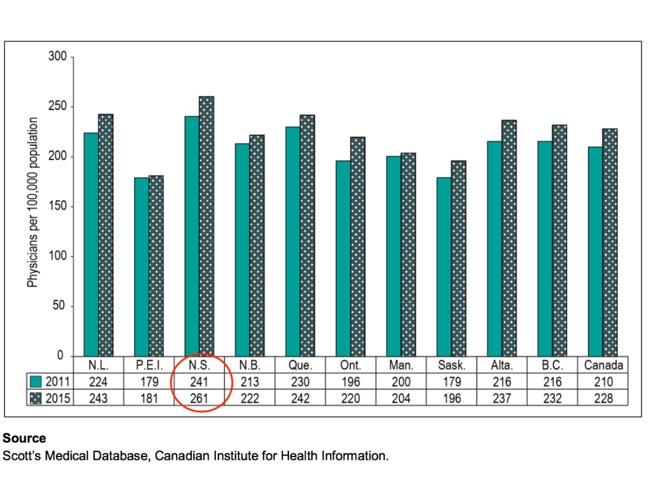
NS has the most doctors per capita in Canada

Canada physicians per capita

The 261 number is about the same as the United States, but much lower than France (330) or Italy (420)*, two of the top-rated health systems in the world.

However, there are subtleties to this that will never be discussed in an election campaign, if ever. For example, Doctors NS argues the high ratio here is driven by the need to treat patients from other Atlantic Provinces. Perhaps, but other provinces will have unique challenges, too, such as vast territories to cover.

The detail-oriented among us are invited to see the Physician Resource Planning report submitted to the Dept. of Health and Welfare.

*OECD (2017), Doctors (indicator). doi: 10.1787/4355e1ec-en (Accessed on 05 May 2017)

VG fix starts at $714 million

Slide 16 CDHA w border smaller
Presentation for Treasury Board, April 22, 2009

Two days into the election, no one seems to want to talk about the all-in cost of bringing hospital services in Halifax up to contemporary standards. In fact, about a year ago, the premier said it would be “irresponsible” to speculate about that.

But at Turpin Labs Irresponsible R Us. So I say the cost starts at $714.1 million, as of 2009, and rises with inflation.

My source is a PowerPoint deck by the Capital District Health Authority intended for presentation to the Treasury Board on April 22, 2009 — the waning days of Rodney MacDonald’s Conservative government.

It’s fun to imagine what the reaction to that must have been. The Tories were going to call an election in two months and no sane Nova Scotia politician would go to the polls with a plan to spend that kind of money in Halifax, even if many of its specialized services are used by all Nova Scotians.

And yet the $714 million number is in the ballpark. By comparison, a new 172-bed hospital slated for completion in Grande Prairie in 2019 looks like it will come in around $740 million. (I don’t know why Albertans tell taxpayers the cost of their hospitals. They’re just wild and crazy, I guess.)

By contrast, my information comes from a document obtained through the province’s tedious and execrable freedom of information process. You can download the deck below. The red circle on Slide 16 is mine.

TL Treasury_Board_Master_Plan_Presentation_April_22_2009.

You may hear that the 2009 and subsequent proposals that each of the previous three governments have seen were too expensive because of “frills” such as single-patient rooms with large out-facing windows. But research shows these features accelerate healing so much that they pay for themselves in reduced patient-load.

The deck says the earliest feasible target for vacating the Centennial and Victoria wings at the VG site is 2015. Yep, that’s right. It could have been done by 2015.

When Darrell Dexter’s NDP took over in June of 2009, the CDHA asked for a meeting the same day. But the Dippers appear to have sought minded-boggling budget cuts that in the end rendered the project moot.

Next up, Stephen McNeil’s government in 2013. They wasted maybe two years amalgamating the province’s nine health authorities, accidentally neutering Halifax’s in the process.

Finally, in April 2016 they announced a “plan” that was mostly cherry-picked from previous proposals. Hell, the Terms of Reference weren’t prepared until a month after the announcement. You can download that below:

Terms of Reference QEII Steering Committee May 25 2016

For an irresponsible comparison, here’s a TOR template:

TOR template-download

Here are some excerpts from the 2009 proposal:

  • An aggressive “push down and out” of hospital services into robust, interdisciplinary and highly integrated community health services centres.
  • Less about architecture, more about interpersonal networks and relationships in a wide array of services – i.e. community health centres and family health teams 
  • Strategically located throughout our communities in locations that respond to community needs. 
  • A mental health master plan.    
  • And Phase 2 – 2018 to 2026:
    A menu of alternatives based on projected needs with flexibility to adapt to: 
  • changing priorities and funding opportunities 
  • Fitness, wellness & commercial building on VG campus 
  • Expansion of Cobequid Health Centre 
  • Freestanding, comprehensive suburban ambulatory centres 
  • Comprehensive community health centres on new sites 
  • Further expansion at HI, VG and DGH sites 

Will the next government follow through this time?

Here’s something George Moody, a health minister in the 1990s, said to the late, lamented Halifax Daily News around the turn of the century: “We’ll never get the health system working right until all the political parties agree on a plan that goes beyond a four-year mandate.”

So, my advice for voters is be cynical, be very cynical.

City Hall doesn’t get the memo

HOW WOULD YOU FEEL if Premier Stephen McNeil suddenly showed up in your backyard to announce the province is building a fountain there?

Pretty much the same as Halifax City Hall must have felt when McNeil materialized in Bayers Lake last week to announce the business park would be the location of a new “Community Outpatient Centre” .

Local politicians love to be included in “good news” announcements in their bailiwicks and provincial governments usually extend invitations to them for events like this. Moreover, often they’re quoted in the related news release and photographed at the event.

This is a common courtesy that greases the wheels of intergovernmental relations. Not this time, however.

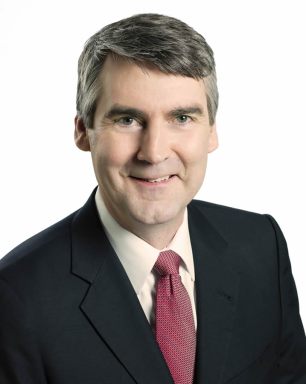
stephen-mcneilThe city acknowledges they weren’t invited, but diplomatically declines to complain. The Premier’s Office, 24 hours after a query from me, declines to explain the omission — if that’s what it was. It’s also possible the premier just didn’t care about City Hall. Another possibility is the premier was in such a hurry to make the announcement before calling an election that his people overlooked protocol.

In any case, the absence of a Halifax representative is unacceptable. Bayers Lake, and the protected wilderness not far from the new Centre, are always hot topics at our Council. McNeil is out of bounds. He’s the premier of Nova Scotia, not the mayor of Halifax. This city belongs to Haligonians, not the province. But the premier seems to be operating by the rules of divine right.

If the Premier’s Office considers this a problem, by now they will have extended a private apology to Halifax and co-ordinated their talking points in the unlikely event this incident becomes news.

But there were more than politicians absent from the announcement.

Also missing were any signs of consultation or useful detail about the services the Centre will offer.

The news release offers merely a hint: “(The) potential services may include an initial visit with a specialist, post-surgery or post-treatment follow-up, blood collection and X-rays.”

Detail is important to Haligonians because if the services to be offered at the new “centre” are being moved from downtown rather than being replicated, then Haligonians will suffer, especially those who have to use the transit system, as sick people and medical staff often do. The whole concept of a downtown is that it centralizes key services, giving everybody more or less equal access. Downtowns are, typically, well-served by public transit, and allow medical people to interact more easily.

But the premier wants the new Centre to be easily accessible to ALL Nova Scotians, meaning rural Nova Scotians. To wit, the premier himself: “It came down to making sure that we were having access to [Highways] 103 and 102 … Not every service needs to be offered in downtown Halifax. We often hear Nova Scotians say traffic and parking are major concerns when travelling to the VG site of the QEII Health Sciences Centre.

“We now have the opportunity to deliver a variety of services that don’t require a trip to the hospital in a more effective and convenient way for patients and their families.” Except, of course, if you’re a Haligonian.

Here’s Paula Bond, vice president of Integrated Health Services, Nova Scotia Health Authority, in remarks undoubtedly prepared with the help of the premier’s army of flacks: “As part of our commitment to provide care closer to home, this site will be a more convenient location for Nova Scotians travelling for outpatient care, treatment and diagnosis.”

Sure. And while we’re at it, let’s move the Valley Regional Hospital’s ER to New Minas.

I’m beginning to think Stephen McNeil has a bit of a hate on for our city. Here he is in March of 2016: “Not every MRI is in Halifax. If you’re a citizen of Halifax and you can get an MRI faster in Yarmouth, you’re going to Yarmouth.”

Duly noted, Dear Leader. I hasten to obey. Your slightest command is my wish.

Haligonians already make arduous trips to places like Sydney and Kentville for orthopedic surgery they can’t get at home in a timely manner. My family has had to do this twice and I have “major concerns” with it, including the initial difficulty in finding the hospital. But then, I’m from Halifax so inconveniencing me is not a problem.

I’ll go further: is it possible the real reason for creating a single health authority was to move health services away from our downtown to areas that lack the population density to support them — without taxpayers noticing? Would the defunct Capital District Health Authority have supported the location of the new “centre”?

If McNeil can justify spending provincial tax money to support the lifestyle of rural Nova Scotians, that’s just fine. But I’m not willing to force our sick to take a bus ride of two hours-plus, with transfers, to get routine diagnoses.

Call me a curmudgeon, but I’d rather to pay to give rural Nova Scotians driving lessons.

Carbon-bonded

Brothers in the battle to save fossil fuels

The relationship  between the presidents of the U.S and Russia may bring down Donald Trump’s administration.

Vladimir Putin has been caught spying on Trump’s political opponents, alerting the world to just how nefarious he can be.

Why are these two risking so much to cozy up to each other?

The answer may well be climate change. Russia and the U.S. rank respectively  number five and two in total carbon emissions. The economy of Putin’s Russia, a petro-state, could collapse if the word finally lost its taste for fossil fuels. Trump campaigned fiercely against climate change action, promising to return thousands of jobs to coal states, and he’s counting heavily on natural gas for so-called energy independence.

And, obviously, two powerful countries are better than one when you’re going against a worldwide scientific consensus. Below are three articles that make the case for this  unholy alliance:

The Chicago Tribune explains why fighting climate change is a political problem for Trump.

 Bloomberg News explains how much Russia stands to gain from climate change inaction.

And Inside Climate News, a Pulitzer Prize winner, explores Russian climate politics in detail.


Irony or hypocrisy?

Another troubling aspect of the trials of Lyle Howe

More than nine months ago, on June 16, 2016, a 41-year-old man from Halifax (let’s call him CR) died in the cells of Halifax Regional Police.

The province’s Serious Incident Response Team

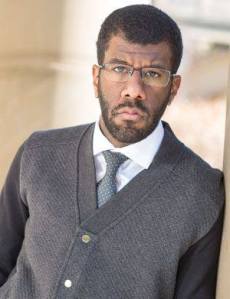
Lyle Howe
Lyle Howe

was asked to investigate. But SiRT has a policy of suppressing the identities of people involved in their investigations. And HRP, in the style of Canada’s famously “tight-lipped” RCMP, has itself made CR’s name a secret.

So, nine months after CR died in HRP’s care, no one will say who he was. This is a serious, but not severe, case of  authoritarianism, which can break out in a police force at any time. In Canada, it is usually associated with the RCMP, not HRP.

But why is the secret investigation taking so long? After all, we know from watching TV that witnesses’ memories fade with time and sometimes they move away or even die.

Incredibly, the answer may lie the high-profile troubles of Halifax lawyer Lyle Howe, who is currently being roasted by the bar society for poor conduct.  CBC’s Blair Rhodes wrote about Howe’s latest trials last week. Here’s an excerpt:

“The three-member disciplinary panel has sat for 58 days since it began 15 months ago. The hearing was originally expected to take about a week.

“The panel chair, Ron MacDonald, also heads Nova Scotia’s Serious Incident Response Team, the body that looks into complaints against police. He has had to schedule breaks in the hearing process to allow him time to do his main job. Decisions from SiRT have been announced in fits and starts over the last 15 months.

“Similarly, panel member Don Murray, a prominent Halifax-area defence lawyer, has had to reschedule cases in order to continue attending the hearing.”

In other words, cases such as CR’s appear to have been delayed because Ron MacDonald, like Don Murray, has too much on his plate. In a general sense, you could say MacDonald and Murray are “double-booked”. This is reasonably common for lawyers, which is why they can often be seen flying around the halls of courthouses, their robes flapping in their wakes like Harry Potter.

OK, you say, but why is the bar society reviewing Howe in the first place? Here’s Blair Rhodes again:

“The bulk of the allegations against Howe focused on rather mundane aspects of his practice — things like double-booking and missing court dates.”

Let’s give this a few seconds of soak time …

Got it? Yep, two of the lawyers reviewing Howe have found the process so demanding that, on the face of it, they are exhibiting the same failing for which they are slow-cooking Lyle Howe.

Could be ironic, hypocritical, or both.

This brings us to the continuing suppression of CR’s name. It’s a serious matter. Being in custody means you’ve lost control of your life to your jailers. It’s a life-and-death responsibility for the jailers. Unfortunately, they’re human, so we create outfits such as the Serious Incident Response Team to keep an eye on them — to ensure cell-deaths, accidental or otherwise, don’t become a routine event in law enforcement.

This is because in less civilized parts of the world, people are arrested and never seen again. Sometimes they die by accident, sometimes not. Their bodies are dumped at sea, fed to animals — whatever. When their loved ones come looking for them, there’s no record of them ever being in custody. Or if there is a record of arrest, it turns out the prisoner was “released” the next morning and then disappeared. Or he hanged himself and incident is still under secret investigation.

If there truly are bad guys involved, the best case scenario for them is that everyone just gets tired of waiting for the answers and stops asking.

Long ago, I met a freshly-immigrated coroner in Montreal at a New Year’s party. We had both been over-served by the time I asked him about an obvious failure of the justice system in Canada’s Ocean Playground.

“Well,” he said, smiling as he swirled his Scotch. “People do get away with things, you know.”

Can’t happen today, you say? Well, maybe not if we consistently exercise proper oversight, which we’re not doing in this case. At the very least, secrecy and investigatory sloth undermine public confidence in law enforcement.

If you’ve read this far, you might enjoy my novel, Max’s Folly. Click here for more information. — Bill Turpin