A lot of folks have trouble getting numbers right, including yours truly, who transposes digits more often than a concert pianist. So it’s best not to get too righteous when people speaking off the cuff fumble the figures.
Nonetheless, the family doctor crisis in Metro Halifax is so serious it’s worth setting the record straight. Fifty-two per cent of Nova Scotians who need but cannot find a family doctor live in the heart of Halifax, not 40 per cent, as Health Minister Randy Delorey told Allnovascotia.com this week. A department spokesperson says Delorey was speaking from memory in the House and later corrected his error.
While Delorey came in low, PC backbencher Pat Dunn came in high, stating that 100,000 Nova Scotians are without family doctors. His interim party leader, Karla MacFarlane, told CTV: “We have a crisis happening in rural Nova Scotia and we know there are 100,000 people without a doctor,” she said.
In fact, 45,555 Nova Scotians cannot find doctors. And the worst crisis is in the heart of HRM, where 23,754 people are doctor-less. That’s 52.1% of the provincial problem visited upon 40% of the population. If you include all of HRM, the numbers become 53% and 42% respectively.
“Oversight” left Halifax out in the cold without enough docs
Health authority came to the rescue
Red zone shows where doctor shortage hurts the most. According to information published April 1, 23,709 Metro residents need family doctors, up 702 since March. Details in the next post.
The family doctor crisis in Metro Halifax occurred because government assumed that the capital city didn’t require its attention as it set about managing the MD supply in rural Nova Scotia.
Wendy Walters, Senior Communications Advisor, Physician Relations for the NSHA, describes it as a bureaucratic “oversight”. I can think of less charitable words, but people do make mistakes (I may have made a mistake once, but the details have grown fuzzy.)
Political interference, on the other hand, would have been be unacceptable. Walters says it didn’t occur: “(The direction was) a policy decision from the Department of Health and Wellness which at the time hosted the New MD approval committee. It was in response to perceived challenges in recruiting to rural areas and came from a reasonable place with the data available at the time.”
In fact, the information was there, but you had to dig for it.
FEELING THE PRESSURE OF THE DOCTOR SHORTAGE The Family Focus explains: “We were finding that our booked appointments for the day were getting filled in the first 30-45min after the phones open. Then people calling after that to try to get a booked appointment would get very frustrated when they were told that ALL of the booked appointments were gone … because there wasn’t a doctor available.”
The family doctor issue acquired a public profile sometime around 2009, but was assumed to be a strictly rural issue until 2016, when the Nova Scotia Health Authority brought Halifax in from the cold.
The deliverance of Metro Halifax (along with the rest of the Central Zone) began in 2011, when the Department of Health and Wellness created the “New MD” committee.
Halifax remained off the committee’s radar until 2016, when the freshly minted NSHA joined the group. The NSHA was handed “accountability” for the province-wide physician supply problem. (See Turpin’s Law, Section 33 subsection 9(a),(1),(ii),(ab), which states “Woe unto whosoever is last to join a committee, for surely he will be assigned the heavy lifting.”)
Walters wouldn’t say so, but I think the NSHA is the hero of the piece, leaning into the task to discover there was a problem in Metro Halifax, too. So, in fiscal 2017, Metro and the rest of the Central Zone received a physician recruiter and incentives matching those enjoyed by the other zones.
The beleaguered Western Zone got a recruiter, too.
Bottom line, Metro was left twisting in the wind for five years or so while government was busy implementing policy for the rest of the province. Today we have 23,709 people who cannot find a doctor.
I combed DHW publications for the origin of the “oversight” and I believe I have found it.
DHW had reports noting “… almost 60 per cent of physicians (are) located in Halifax.” True, but that number included specialists, and NS had 30 per cent more specialists than the Canadian average (see Physician Supply, Environmental Scan, Page 14, and Shaping our Physician Workforce, Page 4). I’m guessing that no one thought to ask how many of those doctors in Halifax were specialists and how many were family MDs.
If I may borrow a medical term, we had an “occult” family doctor shortage in Halifax, i.e., hidden by all the specialists and clouded by the exhaust from their Porsches.
I am Halifax-centric, but I do not minimize the effect all this has had outside Metro; it’s just that the worst problem is here in the middle of the Central Zone. For example, an acquaintance in Musquodoboit with a life-threatening disease has no family doctor to tell him whether a new symptom is benign or possibly something more dangerous.
Note to insiders: The NSHA’s Walters says the accreditation and privileging system was never used to control the number of doctors. That was accomplished simply by managing the number of available positions. However, the NSHA took over physician supply management at about the same time it got responsibility for accreditation and privileging, and I think the two activities became associated in the public mind.
2,280 Haligonians lose their family physicians in two months
The number of citizens in Metro who want but cannot find a family doctor has passed the 23k mark, a notable but dubious achievement.
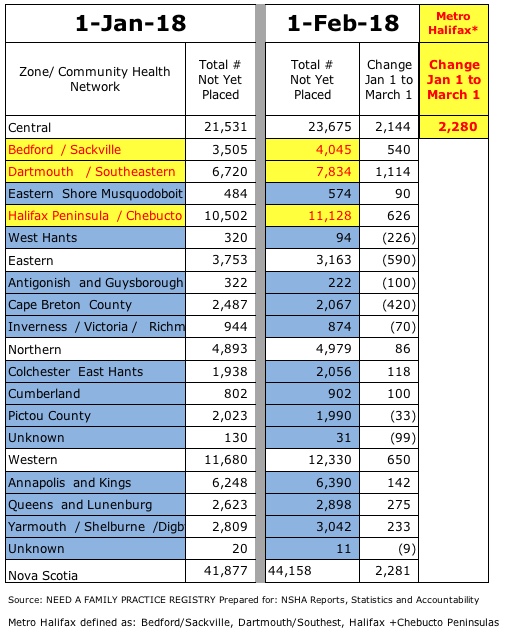
The March accountability report from the NS Health Authority showed 23,007 metro-dwellers without a family doctor, an increase of 2,280 from 20,727 in January. The NSHA says that kind of increase is not necessarily unusual. The next update is expected soon.
The provincial total rose to 44,158 from 41,877, an increase of 2,281. That means Metro Halifax effectively took the whole hit and now accounts for 52% of the entire family doctor shortage in the province. No NSHA zone or Community Health Network even approaches that number. (For these purposes I’m defining Metro as Bedford/Sackville, Dartmouth/Southest, and the Peninsulas of Halifax and Chebucto.)
In percentage terms, Metro citizens without doctors are 6.2% of its population, up from 5.6% in January. It’s the second-worst area by this measure after the hapless counties of Annapolis and Kings at 8.1% (6,390 out of a population of 78,507). But in raw numbers, Metro is the worst disaster in the province.
This is consistent with the instinct of successive governments to put rural Nova Scotia votes ahead of all else. Meanwhile, local MLAs and councillors stand around with their thumbs in their pockets.
Below is a chart highlighting the changes in Metro Halifax (yellow and red), the four NSHA management zones (white), and the Community Health Networks found in each (blue).
Negative numbers on the chart mean fewer people in the area are without family doctors, which is good; positive numbers mean the opposite. The problem seems to be that, likely at the end of the 2017 tax year, a lot of doctors jumped ship or retired.
There is a belief in some quarters the cause of Halifax’s misery was a government decision to steer new doctors toward the countryside and away from Halifax by making it impossible to work here. In other words, government may have gone beyond mere rural incentives to actually barring new doctors from the capital city.
If you’d gone to the Atlantic Superstore on Easter Sunday, you’d have found the doors closed, but not for the reason you think. True, it’s a holy day for observant Christians but, unlike Good Friday, Nova Scotia law does not consider it a paid holiday. However, the law DOES require big retail stores to close, which means their employees, who are not unionized, can’t work and therefore don’t get paid.
For them, it’s Bad Sunday.
Confused? The link above is the government’s attempt to explain it, but it can be head-scratcher. It helps to remember this: government can force stores to close whether or not it’s a paid holiday.
The workers affected are in retail stores greater than 4,000 square feet (370 square metres). That means the most useful stores, selling goods such as groceries and hardware, are closed on Bad Sunday — with no legal requirement for holiday pay.
Many retail employees are not even aware of this because they’re on shift work, so the bosses simply avoid scheduling anyone for Bad/Easter) Sunday. That means the loss of an outrageous number of paid shifts, a loss obscured by the scheduling process.
Retail folks not doing shift-work, however, are well aware they’re getting docked and they don’t like it.
The unions don’t care because their members are covered by collective agreements and therefore exempt from this law. In addition to Good Friday, they typically get Easter Monday off with pay. Some of the larger non-union shops follow suit because management would rather not take a stand.
This is what the Nova Scotia government does with its non-union employees, most of whom are managers. The union long ago negotiated Good Friday and Easter Monday as paid holidays. Managers get the same deal without having to bargain for it.
Adding to the confusion is a long list of very specific exceptions to Bad Sunday. It includes taverns, prefabricated home sales and fish stores, to name a few. Detail lovers can find more here, under “Exceptions”.
As for consumers, well, they can get drunk on Bad Sunday, but they can’t buy a hammer.
Ebenezer Tilton Moseley, independent member of the NS Assembly, 1874
Halifax Examiner Monday about the lack of consultation in deciding how to spend Nova Scotia’s $250 million offshore windfall.
But Kimber imagines that Nova Scotia’s system of government is a participatory democracy, whereas in fact it’s a participatory dictatorship.
And the dictator (“Dear Leader”) is the premier.
This may be why so many eligible voters find something else to do on Election Day — they know that democracy occurs only on the day we choose our Dear Leader. He, and I do mean “he”, will rule for the next four years, depending on his appetite for another election at any given time. (This assumes a majority government. Minority governments weaken Dear Leader’s grip somewhat, which is why voters like them.)
Here’s how it works.
Let’s say someone named Susan has caught your eye as an intelligent, caring member of your community. You and a group of other citizens convince her to run for the House of Assembly.
At first, Susan toys with the idea of running as an “independent” candidate. But then the historian in the group points out the last political rookie to be elected as an independent was Ebenezer Tilton Moseley, in 1874. (We’ve certainly had independent MLAs before, but only after they’ve been turfed out of their party for things like fraud.)
So, the first thing Susan must do is choose one of the three big parties to run for. To keep it simple, let’s further assume Susan joins the ruling party (the Party) and wins the right to be its candidate for your riding.
Accepting that nomination will likely be the last independent decision of her political career in Nova Scotia.
Susan will have to faithfully toe the Party’s line throughout the election campaign. If the Party believes the premier is still powerful enough to win it a re-election, then he will draw most of that line himself.
Once elected, Susan will typically take a seat in the back of the House where she will do and say exactly what Dear Leader wants. If she doesn’t, the premier will likely never appoint her to his cabinet. This is important because going from MLA to cabinet minister would boost her salary by 50 per cent to a total of about $150,000. This is just one of many jobs around the House that Dear Leader and other party leaders can offer their MLAs. They all come with extra cash, starting at about $10,000.
If Susan steps too far off the Party line, she should probably plan on running and being defeated as an independent in the next election.
However, Susan is free to speak her mind at meetings of the Party’s caucus, which is a group comprising the Party’s elected members and, rarely, outside luminaries. But you and your group will never know what Susan says in caucus because the discussions are secret. (In caucus, no one can hear you scream.)
You and your group may get little tidbits occasionally because you’re insiders, but even then you can’t be sure you’re hearing the truth.
As for the voters, well, obviously they’re in the dark. Susan tries to compensate for this by keeping a high profile in the community and helping people deal with the government. This makes her “a good constituency woman.”
Now let’s say that Susan plays the game well and Dear Leader gives her a job in his cabinet as the Minister of Roads.
At last, Susan’s got her hands on the levers of power. She can seek advice from a legion of professional, non-partisan civil servants, make decisions and give them marching orders. The civil servants will implement her decisions even if they disagree with her.
However, she can’t do anything Dear Leader doesn’t agree with on pain of banishment to the backbenches, or worse.
Susan will have an “executive assistant” to help her with constituency matters. However, depending on the premier, her EA’s real job may be to keep tabs on her. If she does or plans something that might hurt Dear Leader or — worse — the Party, her EA will snitch on her. (The Party is everyone’s meal ticket and must be protected at all costs. It also has mystical qualities that only its members can appreciate.)
Still, all in all, Susan has an opportunity to “make a difference” and the person best positioned to help is her deputy minister. Typically, the deputy is a talented, non-partisan person who can run a department of hundreds on a day-to-day basis and also has the savvy to keep Susan out of trouble.
The deputy works where the political rubber meets the non-partisan road without being drawn into politics.
It’s a critical job in a well-functioning Canadian democracy. The right combination of minister and deputy minister can get a lot of good work done.
However, deputy ministers are hired and fired by the premier. So, if Dear Leader really wants his way, he’ll get it.
Many believe the decision-making process in Nova Scotia is convoluted and time-wasting, which is a hallmark of a democracy. But in the final analysis, it’s actually a straight line that begins and ends with the premier.
It’s true that the other nine provinces and Parliament work largely the same way, although the federal Party now has to deal with an increasingly independent Senate.
And just because everyone else is doing it doesn’t mean it’s right for Nova Scotia. Nova Scotians can change our system to something that better suits our values. In Kimber’s case, that includes more consultation. Me, I’d like to see Dear Leader come down a peg or two.
It would be great to hear some other ideas on this. Comments to this blog are moderated and real names are required.
You would think people striving to be politically correct would be more careful with their words. Not in the Gold Trail district of B.C.
There, school-kids are subjected to a poster featuring the phrase “white privilege.”
The term appears to be acceptable in the academic world, where it has several subtle definitions, such as this from Wikipedia: “White privilege has been defined by David Wellman as a system of advantage based on race. It has been compared by Peggy McIntosh to an invisible, weightless knapsack of assets and resources that she was given because she was born White in her time and place in U.S. society … ”
But outside the ivory tower it’s like an experimental virus that’s escaped the laboratory. Some people are immune to it, but for others it causes severe inflammation, i.e., “all I’ve done is work hard at my job but it turns out I owe my success to white privilege, whatever the #$@%! that is!”
Worse, the poster features the schools superintendent wearing hang-dog expression — as if she’s just returned from re-education camp — and declaring she has “unfairly benefitted” from white privilege.
So there it is. It’s not enough to acknowledge we suffer from prejudice in Canada (duh), but we also have to blame whites for it. This is exactly the opposite of how you bring harmony to people with visible differences. (And invisible differences, too, such as language.) But it’s good news for white supremacists, who can point to the poster and other white privilege rhetoric and say: “See, we told you they were out to get us.” Then they can just sit back and watch attitudes harden all around.
Black Lives Matter, by contrast, is a positive phrase. Its message is indisputable, and invites urgent change. But it doesn’t subtly incite retribution against the police.
Réne Lévesque, the late Quebec separatist leader and a great Canadian, understood the danger of inflammatory rhetoric. He avoided turning “the English” into the official enemy of Francophone Quebec, which would have been a winning but bloody tactic.
It’s also worth noting that as of 2016 about 73 per cent of Canadians identified as white (https://en.wikipedia.org/wiki/Demographics_of_Canada#Visible_minority_population) . In 1996 the number was 86 per cent. The intervening 20 years is roughly the time it takes to ascend to a position such as superintendent of schools. So, it’s fair to ask how many people owe their success to “overwhelming white numbers” rather than white privilege.
And you have to wonder about the effect of the poster on students, who have been rightly taught the importance of equality and fellowship from the get-go. Are white students to disregard their achievements because they’ve benefitted from “white privilege”? Are nonwhites to stop trying as hard because they now know — from authorities — that the deck is stacked against them? Should they ostracize their white classmates? Should all the kids be issued colour swatches to help determine their skin colour and therefore whether or not they are the enemy?
And none of this is news. White privilege is just a fancy way of saying something thoughtful Canadians already know and want to eradicate.
I like the old messaging better: we’re the same, we’re all in this together, let’s help each other out.
It takes time to sink in and I wish it didn’t, but it’s the better alternative.
Are Haligonians too haughty to get involved in finding family doctors? Almost 21,000 people within an easy drive from City Hall want a doctor but can’t find one. City council is doing nothing.
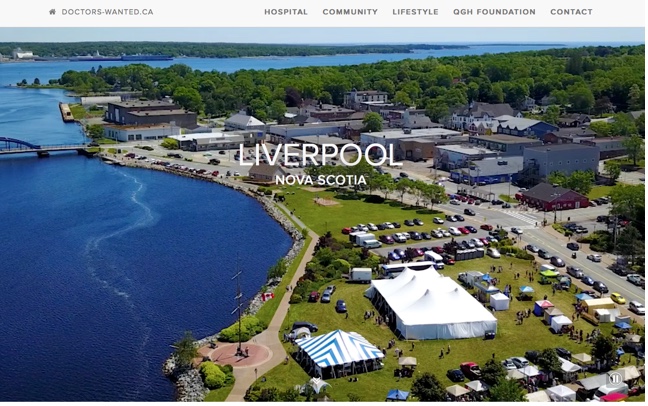
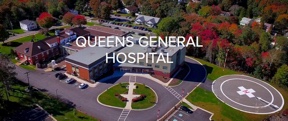
By contrast, in Liverpool, the Queens General Hospital Foundation has created an attractive website about the advantages of practising medicine there.
Is Halifax Council too proud to admit we have a medical problem here? Is meeting in secret to discuss secret complaints apparently levelled against public Councillor Matt Whitman a diversion? Is their plan to distract prospective businesses from noticing that if they come here they won’t be able to get a doctor?
I ask because 6.3 per cent of Haligonians on the western side of the harbour can’t find one, the second-worst rate in the province. The rate on the Dartmouth side of the Harbour is 5.7 per cent, and Bedford-Sackville is 4.0%. Taken together, the rate for these communities (metro Halifax, really) is 5.6 per cent, or 21,000 people. And these are people who WANT doctors, not healthy-as-a-horse twenty-somethings.
Meanwhile, “only” 1.2 per cent of people in Antigonish County can’t find doctors. Cape Breton, mainlanders’ favourite target for derisory comments, is “only” 2.4 per cent.
Here’s a video about Queens County posted by our enterprising Liverpudlians.
Still not worried, councillors? Well, guess which city is doing better than us. That’s right, Moncton. MONCTON!!
Turpin Laboratories asked Halifax’s communications people what we’re doing to attract more doctors. The response: “Physician recruitment and addressing issues of possible physician shortages, is being led by the province as well as the Nova Scotia Health Authority. Although the municipality is not directly involved in these efforts, we aim to contribute to recruitment efforts by attracting potential residents through service and infrastructure improvements.”
Anyway, Liverpool looks like a good place for a doctor to set up a practice. Obviously it’s an engaged community, but there are some other advantages as touted by its website.
For example, they’ve renovated their hospital, the Queens General. The $16m cost was 90% funded by the community.
Did I mention, councillors, that doctors interested in Liverpool have two more provincial incentive options available than they would if they were interested in Halifax? Have you asked the province why?
All that, plus an isolated, kick-ass, white-sand beach half an hour away that Liverpudlians won’t tell you about until you’ve moved there.
Better get moving ladies and gentlemen, before your family doctor sees that website.
MORE GOOD THINGS ABOUT LIVERPOOL
” … an enchanting blend of rich seafaring history, quaint fishing traditions, modern conveniences and services, a thriving arts and culture scene, and numerous recreational areas, all on the shores of the spectacular Atlantic Ocean.
“Known for being kind, open, and generous, Liverpudlians welcome newcomers with enthusiasm. Our community is safe, diverse, and inclusive, featuring people from all walks of life–tradespeople, artists, entrepreneurs, young families, and retirees.”
Emergency Room
QGH has a full-service emergency room with 24/7 coverage. Unlike other smaller municipalities, the QGH ER has never closed in the past 64 years. The QGH ER includes features such as monitoring capabilities, a video-laryngoscope, and a FAST ultrasound, a new digital X-ray, and 24-hour laboratory services.
HOSPITAL SERVICES
The QGH provides many expert services. These include:
Ambulatory Care area with endoscopy and small procedure operating room.
Respiratory therapy.
Occupational therapy.
Physiotherapy services.
Mental health services.
Public health services.
Pharmacy.
Stress testing.
Laboratory services, with full lab and point-of-care testing available.
Diagnostic imaging, with on-call technicians available after hours.
COLLABORATIVE PRACTICE AREA
By using a holistic approach, the hospital’s collaborative practice gives patients access to the most appropriate, responsive, and comprehensive care available. Located in QGH, the collaborative practice features:
Room for five physicians.
A Nurse Practitioner, pharmacist, and social worker.
Family practice nurses.
A mental health group.
Addiction specialists.
Visiting clinics, including Medicine, Surgical, Geriatrics, Palliative Care, Pediatrics, and Psychiatry
Opioid replacement clinic.
Liverpool is a training centre for medical students and Family Practice residents from Dalhousie Medical School.
QGH FACILITIES & FEATURES
Notable facilities and features include:
Helipad.
Digital X-ray machine.
22 acute care rooms with private bathrooms.
4 concentrated care suites.
2 bariatric rooms.
2 infectious disease suites with laminar flow.
Ergonomically designed rooms with overhead lifts.
Large windows that maximize the use of natural light.
A rooftop deck and downstairs atrium for ambulatory patients.
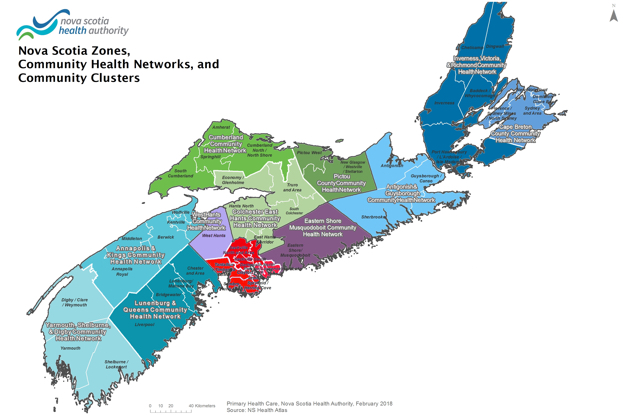
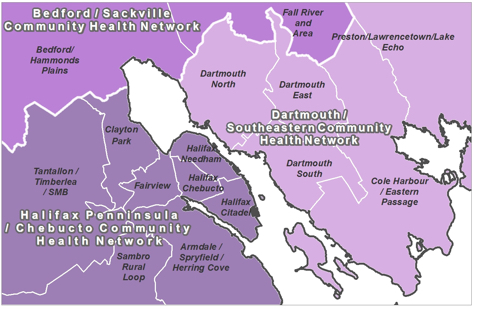
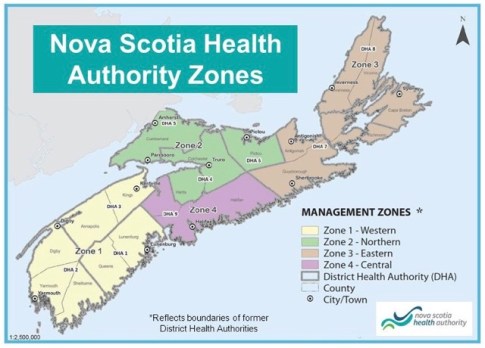
The Nova Scotia Health Authority has four zones–Eastern, Western, Northern and Central (effectively HRM). These are subdivided into Community Health Networks, such as Halifax Peninsula / Chebucto. Maps and data are adapted from NSHA’s NEED A FAMILY PRACTICE REGISTRY Data Overview, January 1, 2018,
(Updated to include a correction on assistance to doctors locating in rural areas.)
That nasty red lesion you see in the middle of the map above is the sore spot of Nova Scotia’s family doctor shortage.
Yep. Half of the people in Nova Scotia who can’t find a family doctor live in the communities surrounding Halifax Harbour.
That’s half the misery resting on the shoulders of 40 per cent of the population.
“We should really get that looked at,” Haligonians say? Well, good, but bear in mind the province still subsidizes new doctors for locating anywhere but Metro Halifax.
And this is a case where raw numbers have more meaning than percentages. Most egregiously, Halifax and Chebucto Peninsulas have 10,502 residents who want a doctor but can’t find one–the worst total of any district. Residents do things like drive to Shubenacadie for care or maintain their own medical records during chemotherapy because they have no family practice to do it for them.
Dartmouth/Southeastern fares almost as badly, with 6,720 doctor-less residents. Together, the Dartmouth/Southeastern, Halifax Peninsula/Chebucto, Bedford and Sackville account for 20,727 of the 41,877 Nova Scotians without a family physician. That’s 49.9% of the entire problem. (NSHA has four zones — Central, Western, Eastern and Northern — each divided into sub-units called Community Health Networks such as Dartmouth/Southeastern in the Central Zone.)
The only record worse than Metro Halifax belongs to the counties of Annapolis and Kings, where eight per cent cannot find a doctor. But, percentages don’t tell the whole story: there are 20,727 people needing docs in Metro vs. 6,720 in Annapolis and Kings.
In percentage terms, Halifax and Dartmouth are the second- and third-worst performers. (This didn’t stop Halifax from attempting to recruit 50,000 Amazon employees to a municipality where already 20,727 people couldn’t find doctors.)
I don’t mean to diminish the problem in Annapolis and Kings. If people in Halifax drive to Shubenacadie to see a doctor, then god knows what you do if you live in one of those counties. Were it not for the misery in Annapolis and Kings in the Western Zone, I would blame this on the rural favouritism baked into our politics.
Percentage of the population currently seeking doctors
Central Zone/ Community Health Network
Total # Not Yet Placed
Population
% of population seeking doctors
Entire Central Zone
21,531
409,706
5.3%
Halifax Peninsula / Chebucto
10,502
167,379
6.3%
Dartmouth / Southeastern
6,720
115,427
5.8%
Bedford / Sackville
3,505
87,838
4.0%
Eastern Shore Musquodoboit
484
18,165
2.7%
West Hants
320
20,897
1.5%
Nova Scotia
41,877
919,849
4.6%
The table below shows the big picture.
Percentage of the population currently seeking doctors
Zone/ Community Health Network
Total # Not Yet Placed
Population
% of Population without MDs
Annapolis and Kings
6,248
78,507
8.00%
Halifax Peninsula / Chebucto
10,502
167,379
6.30%
Dartmouth / Southeastern
6,720
115,427
5.80%
Yarmouth / Shelburne /Digby
2,809
58,393
4.80%
Pictou County
2,023
45,668
4.40%
Queens and Lunenburg
2,623
59,384
4.40%
Bedford / Sackville
3,505
87,838
4.00%
Inverness / Victoria / Richmond
944
33,505
2.80%
Colchester East Hants
1,938
69,991
2.80%
Eastern Shore Musquodoboit
484
18,165
2.70%
Cape Breton County
2,487
102,397
2.40%
Cumberland
802
34,750
2.30%
West Hants
320
20,897
1.50%
Antigonish and Guysborough
322
27,548
1.20%
Unknown
130
–
0.00%
Unknown
20
–
0.00%
Western Zone
11,680
196,284
6.00%
Central Zone
21,531
409,706
5.30%
Northern Zone
4,893
150,409
3.30%
Eastern Zone
3,753
163,450
2.30%
Government gets away with this because most of us have family doctors, so we don’t pay attention. But during your next visit, have a close look at your doctor. Does she look tired, is she nearing retirement? If so, you’d better learn how to keep your own medical records.
In any case, government’s fixation on rural doctor shortages needs to change.
NSHA says it has added a recruitment consultant to the Central Zone, which includes Halifax. (It already had one in Western, which covers Annapolis and Kings.)
The $60,000 is a bursary for locating “in a rural Nova Scotia community outside of the metro Halifax Regional Municipality.” Alternatively, DHW also offers up to $45,000 in debt assistance for docs establishing “in a rural Nova Scotia community.”
I don’t understand the distinction between the rules for the bursary and debt assistance but it doesn’t matter because the message is the same: “We don’t care whether our provincial capital has enough doctors.”
DHW has a 2014 web document called “Shaping Our Physician Workforce.” It was updated in December 2017, so it’s current. Here’s an excerpt from the FAQ:
“Q: Isn’t it true that Nova Scotia has more doctors per capita than any other province?
A: Yes, we do have a generous supply of physicians, but as the consultants found, many are concentrated here in metro Halifax . . .”(Emphasis mine).
Sorry, but I call bullroar on this. As we’ve seen, many patients--i.e. people who need doctors—are also “concentrated here in metro Halifax.” Please note the bureaucratic vagueness of the language and how it leads the unwary into mistakenly believing the root of the problem is still too many doctors in Halifax. That misconception seems to be part of DHW dogma, evidence notwithstanding.
I asked NSHA whether it had adjusted its incentives to reflect the evidence. Here’s the answer: “NSHA does own two incentive programs that are for the entire province: site visits and relocation allowance. We have recently doubled the amount available for relocation allowance. All of NSHA’s western zone was already eligible and now the site visit program has been expanded to include areas within NSHA’s central zone, including urban Halifax and Dartmouth.”
So, thanks to NSHA and no thanks to DHW, doctors seeking subsidies are no longer being entirely waved away from Halifax. Sadly, the Western Zone still lags despite having enjoyed recruitment incentives from the get-go.
Here’s a look NSHA’s recruitment strategy. Here is an example of its pitch to physicians.
It’s hard to understand how we got into this mess, but here’s a conjecture. In the ’90s Nova Scotia was one of the provinces that attempted to reduce health-care costs by limiting the number of doctors eligible for payment by medicare. I guess the theory was fewer doctors meant fewer patients and/or less illness. (What could go wrong with that idea, eh?) So, perhaps the policy produced a cohort of doctors too small to replace their retiring colleagues 20 years later.
There are also politics. Successive governments have demanded policies to drive doctors to rural areas, but perhaps they failed to also keep an eye on the provincial capital (aka the Devil’s Vestibule.)
Or, maybe they did track Halifax and just didn’t care, assuming we would take care of ourselves.
The loathsome dismissal of Halifax’s planning chief
One of the truly loathsome things you can legally do in a workplace is fire someone without giving them notice or a reason, which is what the City of Halifax did to planning chief Bob Bjerke on Aug. 22, just four years after he started the job.
Legally, senior staff had no obligation to discuss it in advance with the Mayor Michael Savage or Council, so they didn’t. They could have done so as a matter of courtesy, given Council’s obviously critical involvement with the city’s planning. At the very least, it would have been professional to give a heads up to Savage, who was elected to lead Council and the city.
The reptilian style of Bjerke’s dismissal suggests that a small group of people had been quietly undermining him for a long time. This is a common office dynamic: members of a cabal constantly reinforce each other’s distaste for someone until, finally, they are all convinced their victim doesn’t deserve civil treatment, such as a chance to improve his perceived poor performance. Such as what professional HR people do. But Bjerke got neither notice nor explanation, rendering his dismissal a fait accompli before anyone could stop it and making it harder to mount a case of wrongful dismissal.
The tactic also liberates plotters from unwelcome advice. For example, given Savage’s responsibilities, wouldn’t it have been wise to ask him what impact the summary dismissal of such a key director would have on Council’s planning agenda and the city’s reputation? As a politician, answering those questions is part of Savage’s skill-set and ought to be in his job description. There’s the rub, of course. What do you do if the mayor affirms senior staff’s authority to dismiss someone, but advises against it? Answer: you change course or prepare to write a bigger severance cheque than you planned.
So, Bjerke was treated like garbage. You can admire the tactic, but not the tacticians.
By coincidence, Council hasn’t met since Aug. 15, the week before Bjerke got the ax, and won’t meet again until Sept. 5, two weeks after. It’s possible councillors will say nothing on that occasion because staff hiring and firing are outside their purview. But they ARE answerable if the planning process goes off the rails, again, so they may have some pointed questions about whether they are being well-served by senior staff.
Staff will remind Council and the public that the topic is a “personnel matter” and so, according to the city charter, it must be debated in secret. That is wrong: the charter gives council the OPTION to meet in secret, but does not REQUIRE it.
Next, we’ll be told council can’t discuss it publicly because of solicitor-client privilege. Again, this is wrong. Solicitor-client privilege binds the SOLICITOR to secrecy, but the client is perfectly free to discuss her own business, even if her lawyer is opposed to the idea.
We may also be told open discussion would prejudice the city’s position in the (likely) event of litigation, again costing taxpayers more money. Me, I think it’s worth the price just to get a peek at City Hall’s inner workings.
As a mere civic peasant, I’m not meant to know about Bjerke’s performance and I don’t. But the despicable process of his dismissal does bring to mind a quote from Jonathan Swift: “When a true genius appears, you can know him by this sign: that all the dunces are in a confederacy against him.”
Friday night bikes: helping immigrants get rolling in their new city
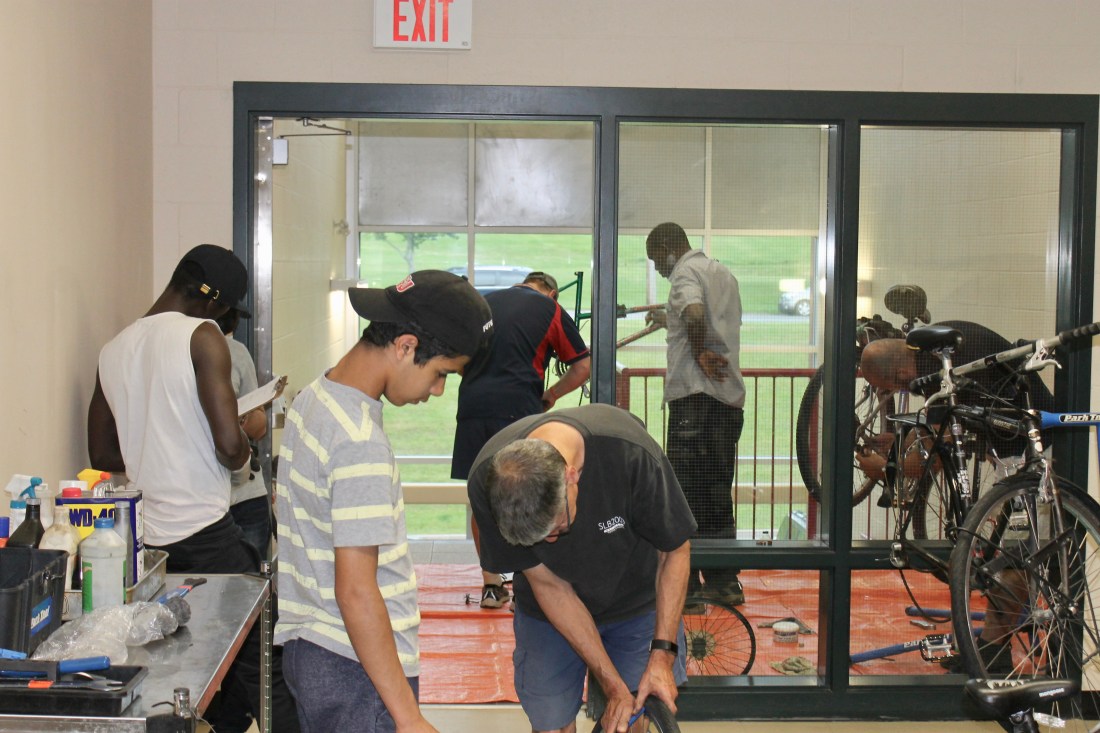
It’s an unexpected sight to say the least. On most Friday evenings, if you walk past reception at the Citadel Community Centre and climb a flight of stairs, you’ll find eight or so people repairing bicycles — on the landing.
If you squeeze past the commotion, you’ll find a large storage room dominated by countless old bicycles. They’re awaiting repair and then assignment to new owners from the city’s fast-growing immigrant population.
“We’re one of the few organizations like this that does not need more volunteers right now, but I expect that to change as we grow, so we’re always glad to hear from skilled mechanics,” says Adam Berry, who manages the Welcoming Wheels project for the Ecology Action Centre and its partners.
And it turns out that sharing a passion for biking is a great way to overcome linguistic and cultural barriers. Adam estimates 80 per cent of the volunteers at Welcoming Wheels are themselves recent immigrants.
On the face of it, the project is simple: repair donated bicycles and give them to newcomers. But there’s more to it. Some volunteers are regulars on Friday nights, others take on tasks such as collecting the bikes, managing inventory, raising money, training people to ride safely on Halifax streets, translating, and organizing the distribution of street-ready bikes.
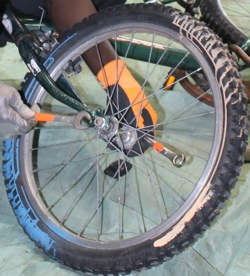
Ephraim Mapendo walked in with his bike while Adam and I were talking about all this. Adam eyed the tires and suggested Ephraim add some air. That segued into a discussion about whether narrow or wide tires are better for riding in the snow.
Snow?
“Yep. Ephraim lives in Spryfield and needs his bike to get to work at the Walmart in Bedford.”
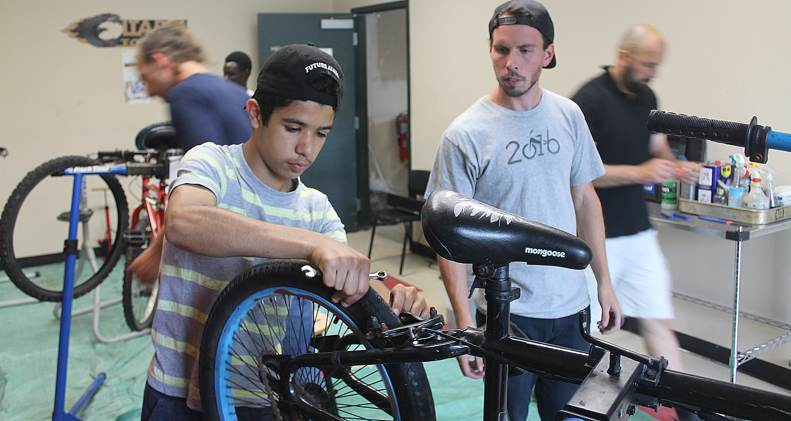
Adam, an enthusiastic BMX biker who recommends narrow tires for snow, said Ephraim is an example of one of his earliest insights at Welcoming Wheels: “Like most of the world, immigrants want bikes for economic reasons, not recreation. North Americans see it is as hobby, which is probably why we have the lowest bike ridership anywhere.”
Well, hobby or not, volunteers are drawn to the landing on Friday nights to fix bikes and, at break-time, enjoy traditional Canadian cuisine — pizza.
More photos below.
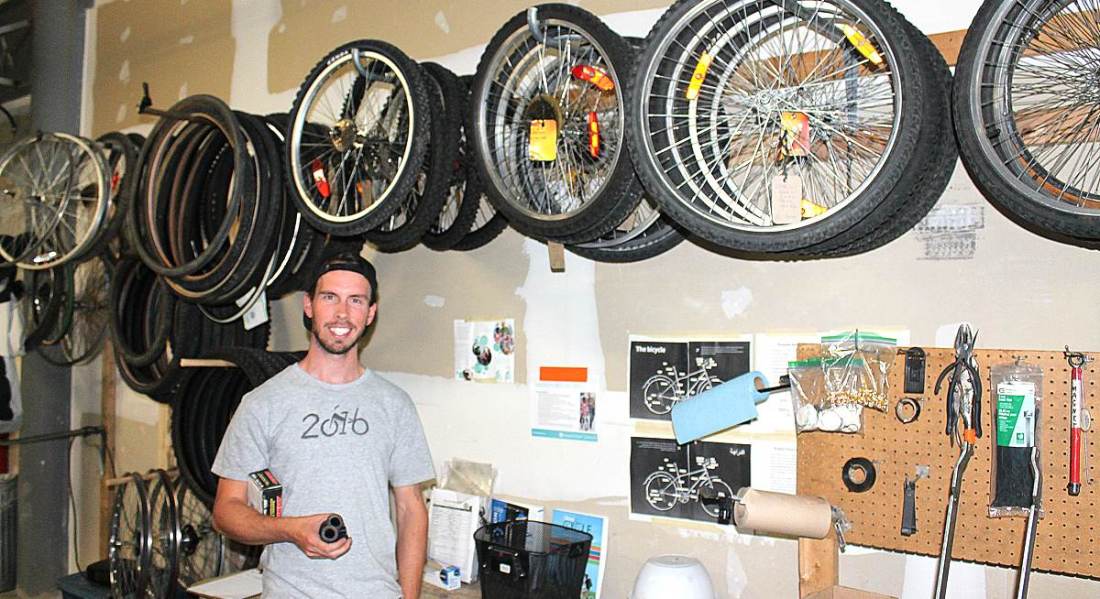
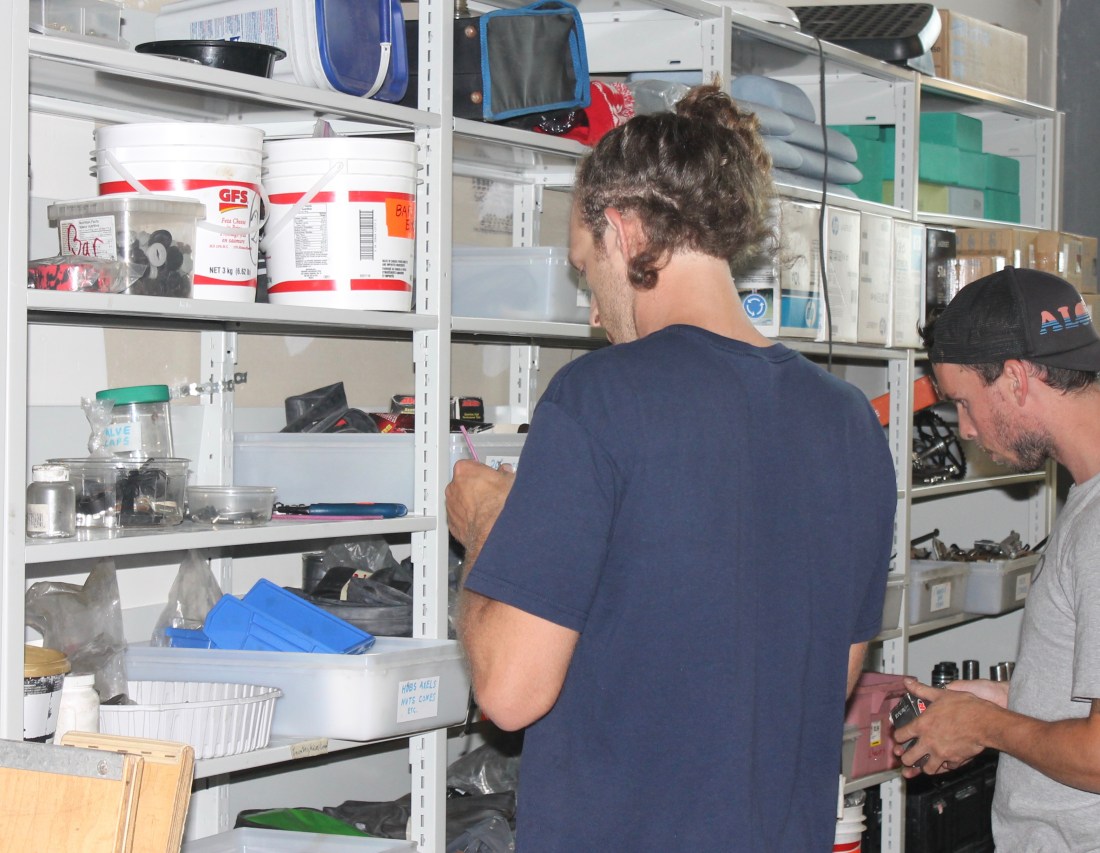
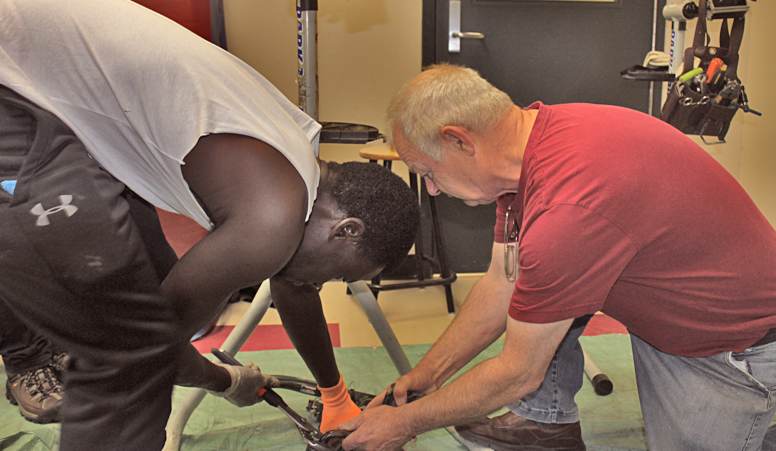
Stored bikes at the Citadel Community Centre, waiting for owners or repair. The Immigrant Settlement of Nova Scotia, Bike Again and the Halifax Cycling Coalition also support Welcoming Wheels.More bikes. In just over a year, Welcoming Wheels has refurbished roughly 100 bikes and trained their new owners.Welcoming Wheels manager Adam Berry in the storeroom at the Citadel Community Centre.It’s Friday evening and things start to get busy outside the storage room at the Citadel Community Centre. The volunteers work on a stair landing because working in the much larger storeroom would create an insurance issue.Parts are bought, bartered, borrowed and scrounged. Nothing usable is thrown away. Andrew Richards, left, and Adam Berry comb through the collection looking for a part: “There’s gotta be one somewhere in here.”With the action picking up, something catches Adam’s eye as he walks by Imad. It’s a busy evening and Adam tries to make sure everyone’s got what they need.Yassir Adem, left, and Bill Rudolph bear down on a tricky repair.Saturday, July 15: The mood is light and expectant as people gather to collect their bikes at Clayton Park Junior High. Welcoming Wheels set up on an outdoor basketball court to present the bikes and provide safety training. It was also a great place to practise your Arabic, Tagalog, French, and likely several other languages.
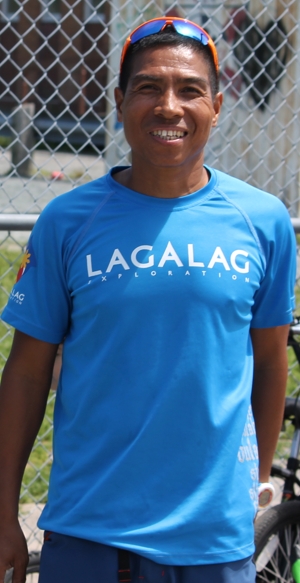
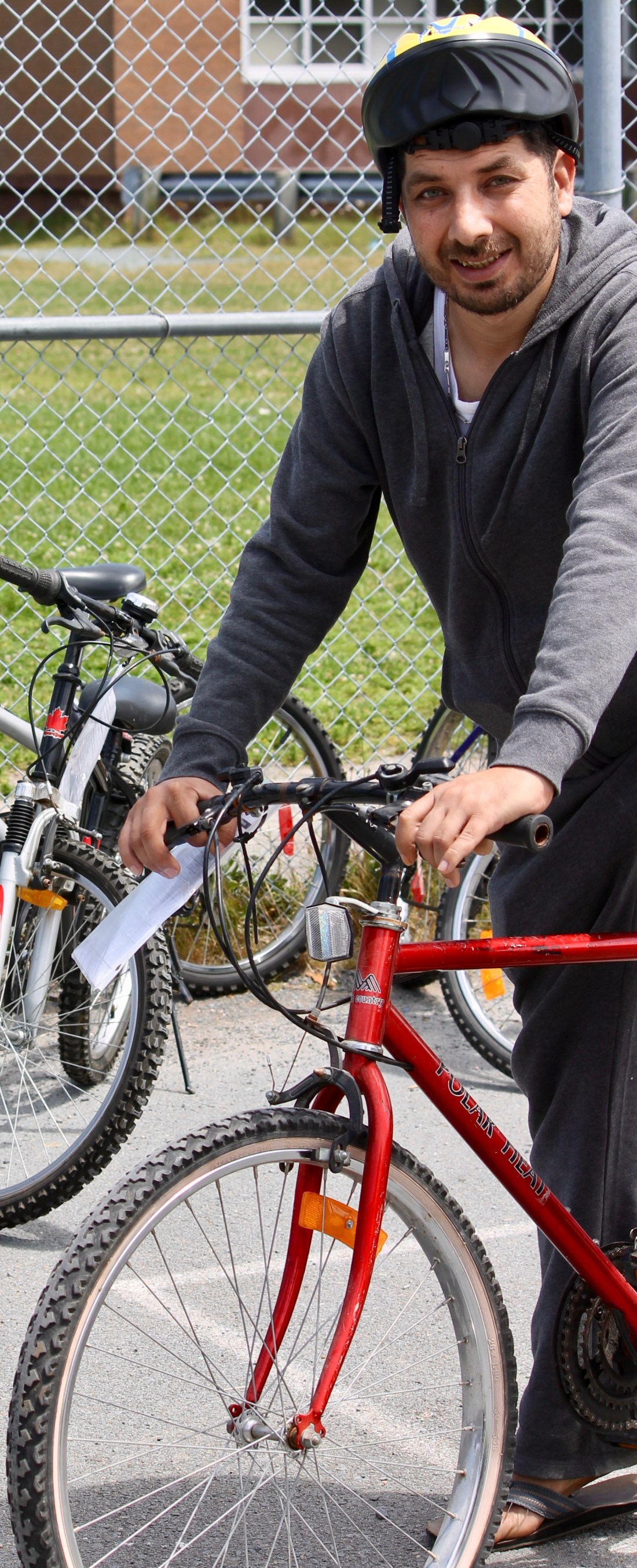
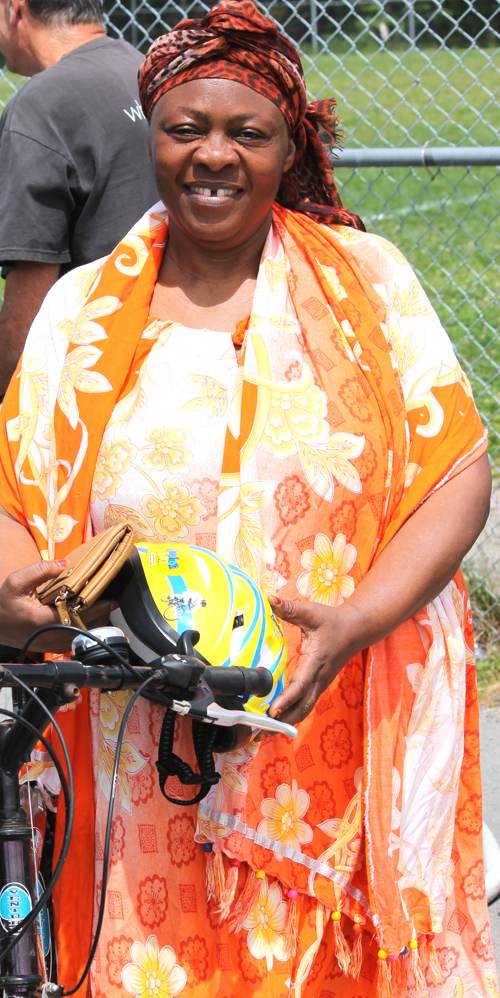
Danny Dimatera, who has biked “hundred and hundred of miles” in the Philippines, stands by to help people adjust their bikes to fit. “Bikes build confidence,” he says. One of the last-minute jobs was attaching bells to handlebars. Ever versatile, Turpin Labs abandoned its journalistic detachment to install not just one, but TWO bells. Whew!Shikh Mous Alahmad tries on his new bike. Many immigrants need bikes for economic reasons, not just for recreation.Masiko Sebatakane can’t wait to get out on the road. Every bike comes with a light, a bell, a helmet and instruction in cycling safety.Wafaa Hamid, left, waits somewhat patiently for Danny Dimatera to make the final adjustments to her bike while her father, Ahmed, looks on.… and she’s aboard! Volunteers want to make sure she can ride and remind her about the safety training. But she takes off smoothly and starts circling the court on her own: “I’m OK. Thank you. Goodbye.”









 And now this …